Artificial nails have become one of the most popular beauty solutions for people who want salon-quality results without spending hours in a nail salon. Whether you choose press-on nails, gel extensions, or acrylics, there are still many common questions people ask before trying them.
Below are 10 frequently asked questions with clear explanations to help you understand artificial nails better.
ⅠHow to doartificial nails for beginners?
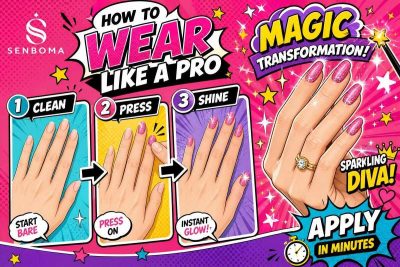
Step 1: Choose the right size (most crucial) Place the false nail onto your natural nail to compare, covering the entire nail surface but not extending beyond the sides.
Choose one for each of the 10 fingers; usually, 4-5 different sizes are needed for each hand. It’s better to choose a slightly smaller size and then file the sides until it fits.
Step 2: Prepare your natural nail,Trim and file your natural nail. Use an orange wood stick to push the cuticles back.
Lightly file the nail surface (to increase roughness).Wipe with an alcohol swab and let it dry completely.
Step 3: Trim the false nail (optional),If the false nail is too long, trim it to the desired length before applying. Trimming after application can cause cracking.
Step 4: Apply gel nail glue,Apply a thin layer of nail glue to the inside of the false nail.You can also apply a small drop to the natural nail surface.
Don’t apply too much—too much will make it less adhesive.
Step 5: Press and apply, Align from the nail root and slowly press down at a 45° angle. Push from the center outwards to remove air bubbles.Press firmly for 10-15 seconds.
Step 6. Finishing Touches,Refine the shape with a file (square/almond/oval).Apply a top coat to make the edges smoother and longer-lasting.
After application: Avoid contact with water for 1 hour. Wear gloves when washing dishes or hair. If any part feels raised, reapply glue immediately; do not force it.
ⅡWhat is the trick to getting artificial nails to stay on?
This is the most important step; many people fail to apply the press-on nails properly because they neglect this.
Thoroughly remove grease — Wipe the nail surface with alcohol or a dedicated nail cleaner to remove grease and moisture.Retract cuticle—Push the cuticle back to maximize the adhesion area.
Buff the nail surface—Lightly buff the nail surface with a 100/180 grit nail file to create micro-textures and increase adhesion.
Dust removal — Clean again with an alcohol wipe and blow dry.
Choose the right glue. Recommended products for different scenarios: Daily wear (1–2 weeks): Professional nail glue (thin layer); Special occasions (1–3 days): Double-sided adhesive (easy to remove); Long-term wear (2–4 weeks): Nail glue + Builder Gel (curing).
✅ Application techniques
Press from the nail root to the tip to remove air bubbles.
After application, press firmly for 10–15 seconds.
Do not contact water immediately after applying glue; wait at least 1 hour.
The size of the artificial nails should be appropriate; it’s better to be too small than too large—too wide and the sides will curl up, which is the main cause of peeling.
ⅢWhat are common mistakes when applyingartificial nails?
❌ Mistake 1: Nail surface not properly cleaned
Problem: Applying the press-on nails directly to a nail surface with oil, moisture, or cuticle residue.
Consequence: Falls off within hours.
Correct Method: Wipe with an alcohol swab → Let dry → Reapply.
❌ Mistake 2: Choosing too large a size
Problem: The press-on nails extends beyond the sides of the natural nail.
Consequence: Edges hang loosely, lifting from the sides.
Correct Method: Better small than large; ensure the sides do not extend beyond the natural nail edge.
❌ Mistake 3: Cuticle not pushed out properly
Problem: Cuticle still covers the nail root, preventing the press-on nails from adhering completely.
Consequence: Lifts from the root, doesn’t last more than a few days.
Correct Method: Push the cuticle into place with an orange stick before applying.
❌ Mistake 4: Incorrect glue amount
Using too little or too much glue results in poor adhesion, easy falling off, air bubbles, and brittle edges.
Correct Method: Apply a thin, even layer.
❌ Mistake 5: Insufficient pressing time
Problem: Pressing on for a few seconds and then releasing.
Consequence: Insufficient adhesion, easily falls off.
Correct method: Press evenly and continuously for 10-15 seconds.
❌ Mistake Six: Contact with water immediately after application.
Problem: Washing hands or dishes immediately after application.
Consequence: Adhesive fails before fully curing.
Correct method: Wait at least 1 hour before contact with water.
❌ Mistake Seven: Nail surface not buffed.
Problem: Skipping the filing step.
Consequence: Nail surface too smooth, poor adhesive adhesion.
Correct method: Lightly buff the nail surface with a 100/180 grit file to create micro-texture.
❌ Mistake Eight: Forcibly peeling off the artificial nails.
Problem: Forcibly prying off the press-on nails when it lifts or when wanting to change to a newer style.
Consequence: Damages the natural nail layer, making it thinner and more brittle.
Correct method: Soak in warm water to soften or use artificial nails remover to gently push it away.
❌ Mistake Nine: Ignoring the lifting edges.
Problem: Notice the edges lifting but are too lazy to deal with it.
Consequence: Water gets in, bacteria grow, and the nail surface turns green.
Correct method: Immediately touch up the glue or replace if you notice any peeling.
❌ Mistake Ten: Not Replacing for Too Long
Problem: Wearing the same artificial nails for more than 4 weeks.
Consequence: Hygiene hazards, damage to natural nails.
Correct Practice: Replace every 3-4 weeks at most.
Summary in one sentence: Proper pre-treatment + accurate size selection + avoid water contact = double the durability of the artificial nails.

ⅣCan pregnant women wear press-on nails?
Yes, but you need to pay attention to the glue’s ingredients, the environment in which it’s used, and the frequency. Currently, there is no clear evidence that normal use of nail glue will harm pregnant women or the fetus, but it’s recommended to be more cautious during pregnancy.
Most nail glues are cyanoacrylate glues, similar to super glue. Common ingredients include ethyl cyanoacrylate and butyl cyanoacrylate.
When the glue cures, it releases a small amount of irritating odor, which may cause eye and nasal irritation and nausea (pregnant women are more sensitive to odors). However, there is currently no evidence that normal exposure will cause fetal malformations or miscarriage.
Acetone Nail Remover,Many people use acetone to remove nail glue. Acetone is highly volatile, and inhaling large amounts during pregnancy is not recommended, but occasional use for nail removal is generally considered low-risk.
Allergic Reactions; Hormonal changes during pregnancy may make the skin more sensitive.
Possible side effects such as Redness and swelling around the nails,Itching,Contact dermatitis.
If you have never used a particular glue before, it is recommended to test a small amount first. Safer approach For pregnant women, the preferred choice is adhesive tabs,Instead of Nail Glue.
Why? because almost no volatile odor, No acetone removal required, Less damage to natural nails. Although the lasting power will decrease from 7-14 days to about 3-7 days, it is more suitable during pregnancy.
Ⅴ Are press-on nails damaging?
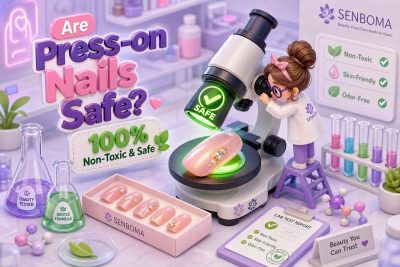
Press-on nails don’t damage the skin, they can cause problems around the skin or nails under certain circumstances. The main risks stem from the adhesive and how it’s used.
The adhesive used for artificial nails is usually cyanoacrylate (similar to super glue), which may cause redness and itching around the nail edges, mild burning sensation and contact dermatitis (for those allergic to the adhesive)
However, these are considered individual allergic/irritant reactions and won’t happen to everyone.More common problems aren’t actually with the skin, but rather: Forcibly removing the press-on nails → damaging the nail surface and surrounding skin
Excessive glue spillage → skin irritation
Not replacing them for a long time → creating a damp environment leading to paronychia or bacterial growth
Over-buffing/cleaning → thinning the skin barrier
How can you minimize the risks?
Avoid direct contact between the glue and skin (this is crucial),Don’t forcibly remove them; always use nails remover or soak the area to remove them,Perform a small skin test beforehand,Choose a low-irritant glue (some are labeled hypoallergenic) and Keep the area around the nail dry and clean after use.
Under normal and correct use, press-on nails pose a very low risk to the skin. The real problems are mostly due to: allergies + glue contact with skin + incorrect removal methods.
Ⅵ Can I shower with press-on nails?
If you’re using nail glue or nail adhesive tabs, and they’re firmly attached, you can shower normally. They won’t fall off after short periods of water contact. However, frequent and prolonged hot water rinsing is not recommended, as it can affect their adhesion.
To ensure a more secure application, thoroughly clean your nails (with alcohol/cleaning pads) beforehand. Avoid soaking your nails in water for extended periods immediately after application (at least 6-12 hours).
❌ Not recommended: Showering less than 1 hour after applying the press-on nails; using cheap adhesive glue; continuing to soak the nails even when the edges are already peeling.
Ⅶ Do press-on nails hurt at first?
Wearing artificial nails shouldn’t hurt, but many people experience mild discomfort, which is normal. If there’s significant pain, it usually means they weren’t applied correctly.
Normally, you might feel a slight tightness (like your nail is being covered) and a slight foreign body sensation after first wearing them. This usually subsides within 1-2 hours.
If you experience any of the following, it indicates something is wrong, Possible causes include the press-on nails being too small or too curved, pressing too much glue onto the nail surface, squeezing the nail bed, applying them too close to the skin (touching the nail bed), or applying too much pressure for too long. Some people experience pain due to skin allergies.
Many first-time trying artificial nails choose a size too small. Applying them crookedly and pressing hard can lead to what appears normal when it’s actually incorrect. Learning the correct way to wear press-on nails will prevent pain.
Ⅷ Can artificial nails cause fungus?
Yes, press-on nails can indeed increase the risk of fungal infections in certain situations. However, the key factor is not the “artificial nails itself,” but rather the “wearing method + hygiene + prolonged damp environment.”
Fungi thrive in three conditions: dampness, warmth, and a confined space.
1.Artificial nails can create an “ideal environment” in these situations, such as when the nail tip is lifted or has gaps. This allows water, hand sanitizer, and sweat to easily enter, creating a “damp environment within the nail bed.”
2.Wearing artificial nails for too long, exceeding the recommended period (usually 10–15 days), allows water to accumulate under the nail, promoting bacterial growth.
3.Applying artificial nails before cleaning the nails allows any natural oils or bacteria to be trapped and multiply.
4.Forcibly tearing or pulling at press-on nails causes microscopic damage invisible to the naked eye, making it easier for fungi to invade the nail bed.
If your nails turn yellow, white, become brittle, or experience slight pain, immediately stop using press-on nails. Allow your nails to “breathe” regularly, and wait 1-2 days after removing the old press-on nails before re applying. Clean your nails with alcohol before application, and limit the wearing time to 7-10 days. Avoid prolonged soaking in water and prevent glue from seeping onto the skin around the nails.

Ⅸ: Can I wear press on nails with contact dermatitis?
Yes, but with caution, and in many cases not recommended. It depends on the severity and triggering factors of your contact dermatitis.
Why might artificial nails worsen contact dermatitis? Because contact dermatitis is essentially an allergic or irritating reaction of the skin to certain substances, and common risks associated with artificial nails include:
Glue (the main problem): Many contain acrylates, which are strong allergens. Base coat/top coat/UV gel: These can also trigger or worsen allergies. During nail removal, acetone or friction can further irritate the skin. In a confined environment, the nails are damp and hot, making them more prone to inflammation or secondary infections. If your contact dermatitis is caused by glue, continuing to wear them is essentially repeated exposure, which can easily worsen the condition.
If you fall into the following categories, you’ll be relatively safer: Your dermatitis has completely healed. The allergen is clearly not nail gel glue (e.g., detergent, metal, skincare products). You’ve chosen press-on nails with a non-irritating glue application method.
Safer Options (If you really want to wear them),Compared to traditional nail art/UV gel, we recommend.
✔ Choosing press-on nails with medical-grade double-sided adhesive patches
✔ Do a skin patch test.
If you only want aesthetics, you can try “glue-free/low-irritant press-on nails” for a short period, such as 3-7 days.
ⅩAre press-on nails safer than gel?
Artificial nails are safer than gel nails in terms of chemical irritation risk. This is because press-on nails do not require UV/LED lamps, while gel nails require light curing. Long-term, repeated exposure to UV lamps carries a certain risk of skin aging and photodamage (although the risk is low per instance, it is cumulative).
They involve fewer chemicals. Gel nails use acrylate monomers (such as HEMA), which are known to be highly allergenic ingredients, while press-on nails mainly consist of double-sided adhesive, nail glue, or adhesive stickers. Artificial nails have a lower overall composition complexity.