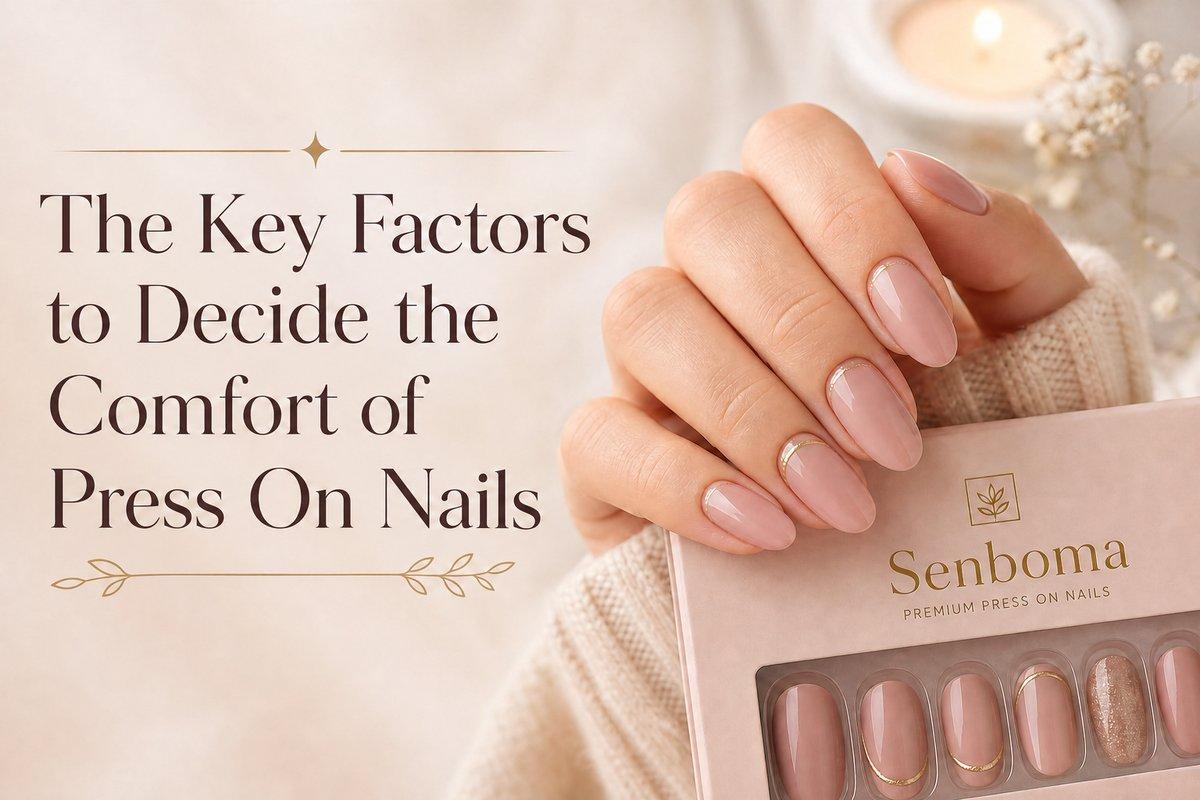
Human nails are not flat—they have a natural curvature. The fit of this curvature directly affects wearing comfort, pressure distribution, and overall safety. In press-on nails, the C-Curve plays a crucial role in determining how well the nail adheres to the natural nail, how pressure is distributed, how securely it stays in place, and how natural it looks. In simple terms, the C-Curve is like the arch of a shoe: when the shape matches your foot, it feels comfortable; when it doesn’t, discomfort, slipping, and poor fit can occur.
What Is a C-Curve?
The C-Curve refers to the curved shape of a nail tip when viewed from side to side and from the cuticle toward the free edge, forming a profile similar to the letter “C.”
A more pronounced C-Curve creates a more dimensional appearance and closely mimics the natural contour of real nails. A flatter C-Curve may provide less contact with the natural nail, which can result in reduced fit, decreased stability, or a less natural appearance. The right C-Curve helps ensure better comfort, stronger adhesion, and a more natural-looking manicure.
Why does C-Curve determine the comfort ofpress-on nails?
Many people choose press-on nails based on style, color, and shine, but what truly affects the wearing experience is often the overlooked C-Curve. The closer this curve matches the natural curvature of the human nail, the more comfortable the wear.
1.Fits Natural Nails
Natural nails are not flat; they have a certain curvature. If the C-curve of the press-on nails matches the curvature of the nail, the tip will fit snugly and won’t easily lift. If the C-curve is too flat, there will be gaps at the fingertips, which can trap air and moisture, making it uncomfortable to wear and even prone to falling off.
2.Pressure Distribution
A proper curvature can evenly distribute the force of pressing and impact. A mismatched curvature on the press-on nails concentrates pressure at a single point, easily causing pain or the nail tip to lift.
3.Natural Appearance and Feel
A natural curve makes it look like a real nail, and your fingers won’t feel awkward when wearing it. A curve that’s too flat or too sharp will look unnatural, feel uncomfortable, and may snag on clothing or chafe your hands.
4.Preventing Nail Injury
Overly flat press-on nails don’t adhere well and can create pressure points at the nail root or fingertip, potentially damaging the natural nail over time. A properly designed C-Curve supports the entire nail curve, making it safer to wear.
The quality of a C-Curve is directly related to the factory’s price and manufacturing capabilities.
Let’s look at it from several angles:
1.Insufficient Mold Precision
High-quality press-on nails are typically injection molded using precision molds or pressed using CNC molds. Cheap factories, in order to reduce costs, may use inexpensive molds or reuse old molds, resulting in poor precision control, inaccurate curvature, uneven nail plates, and looseness or lifting during wear.
2.Insufficient Material Elasticity
Curvature is not just a shape issue, but also involves the material’s resilience. Press-on nails with too flat a curvature may be due to a material that is too hard or has poor resilience, resulting in an unnatural fit. Cheap materials have low cost, high hardness, poor elasticity, and poor fit.
3.Low Production Consistency
High-quality factories strictly control the thickness and curvature of each batch to maintain uniformity. A common problem with cheaper factories is that different batches of the same nail tip have significantly different curvatures, leading to inconsistent wearing comfort.
Senboma designs standardized series using human body data measurement and advanced processes such as two-color injection molding to ensure a beautiful appearance while maintaining a comfortable feel. Precise material proportions control the balance between elasticity and strength, allowing for customized production to meet the needs of different markets and customers.
Besides curvature, what other factors determine the wearing comfort of press on nails?
It’s not only about the C-Curve, but also about many other key factors, such as material hardness and elasticity, thickness control, size matching, surface and edge treatment, adhesive, breathability, and 3D fit design in addition to the C-Curve.
1.Material Hardness and Elasticity
Press-on nails require a certain level of support, but excessive hardness or softness will affect comfort. The material used for nail art has a decisive impact on its flexibility, thickness, breathability, and overall comfort. Common materials on the market include PMMA (polymethyl methacrylate, commonly known as acrylic) and ABS (acrylonitrile-butadiene-styrene copolymer) resin.
PMMA has advantages such as high resilience, good toughness, resistance to creases, high transparency, thinness and natural appearance (0.3-0.4mm thickness), beautiful colors, and high texture. Its disadvantages are a higher price, relatively insufficient hardness (unsuitable for heavy-duty designs), and high requirements for manufacturing processes. However, it offers high comfort, less pressure, a feel close to natural nails, and good breathability.
ABS, on the other hand, is cheaper and more durable. Its disadvantages are relative thickness, lower transparency than PMMA, potential tightness, and potential skin irritation, resulting in relatively lower comfort.
Therefore, PMMA material is considered a high-quality choice for providing a more comfortable wearing experience due to its lightness, high resilience and good breathability, especially suitable for users who pursue the “natural nail” effect.
2.Size Match
Size matching is one of the primary factors affecting the comfort of press on nails. If the size of the press on nails does not match the width and length of your natural nails, it may cause the following problems:
Too tight or too small: The edges of the press-on nails may press against the skin on both sides of the nail, causing pain, discomfort, and even affecting blood circulation.
Too large: The press-on nails may cover the skin around the nail, causing a foreign body sensation, easily snagging, and not fitting well, affecting its durability. Therefore, choosing press on nails that precisely match your own nail size is crucial.
3.Thickness Distribution and Cuticle Thinning
The thickness distribution of the press on nails, especially the thinning treatment at the cuticle, significantly impacts comfort. High-quality press-on nails should have a moderate thickness—neither too bulky nor too thin and brittle.
Cuticle area thinning: When the edge of the press-on nails that meets the cuticle is tapered or thinned, it allows for a more seamless fit at the base of the natural nail. This reduces the sensation of pressure or foreign objects, giving the appearance of natural nail growth. Conversely, if the cuticle area is too thick or poorly finished, it creates a noticeable “ledge” and can cause significant discomfort.
4.Flexibility and Resilience
The flexibility and resilience of press on nails determine whether they can bend without breaking under external force and quickly return to their original shape. Flexible press on nails adapt better to the natural curve of the nail, reducing stiffness and making them more comfortable to wear. High resilience means that even if the press on nails is slightly bent or squeezed, it can quickly recover, is less prone to creases, extends its lifespan, and reduces discomfort caused by deformation. PMMA material performs excellently in this regard.

5.Edge Treatment
The edge treatment of press on nails directly affects whether they will scratch the skin or cause discomfort during wear. Rounded and burr-free: Hand-brushed edges should be rounded and smooth, without burrs, ensuring no irritation or discomfort when in contact with the skin. The side lines of the press on nails should ideally be relatively straight; excessively curved side lines may affect the wearing effect and comfort.
6.Application Method and Pre-treatment
Proper application and proper nail preparation are the foundation for ensuring both comfort and durability of press-on nails. Thoroughly clean the nail surface and lightly buff before application to enhance adhesion, reduce lifting and water ingress, thus improving comfort.
Choose the right adhesive: Gel nail tabs and nail glue are commonly used adhesives. Gel nail tabs is relatively gentle and easy to remove, suitable for short-term wear; nail glue are more durable but more difficult to remove. Choosing an adhesive suitable for your needs and nail condition can avoid pain or allergies caused by adhesive discomfort.
The press-on nails should be applied at a 45-degree angle to the nail bed, then gently flattened and pressed to ensure no air bubbles and a tight fit against the nail bed, avoiding pressure on the skin.
7.Adhesive Safety and Allergenicity
The chemical components of adhesives can cause allergic reactions in some users, such as redness, swelling, or itching of the nail bed, which can significantly affect wearing comfort. Users who are sensitive to certain resin ingredients may develop reactions even if they have no prior allergy history. Therefore, mainstream products in Europe and the US now avoid HEMA and TPO, emphasizing natural and safe formulations. It is recommended to choose gentle adhesives that minimize or prevent discomfort during use, and to perform a patch test before the first application to reduce the risk to the lowest possible level.
8.TheHealthCondition of theNaturalNails
The health condition of natural nails can also affect the wearing experience of press on nails. If the natural nails are weak, thin, or damaged, wearing press-on nails may increase pressure and even cause discomfort or pain. Prolonged use may restrict the nails’ “breathing,” potentially promoting fungal growth or causing thinning and deformation, which further affects comfort. It is recommended to regularly check the condition of the nail pieces, replace them as needed, and allow the nails some time to breathe. Consumers should consider these factors when selecting and using press-on nails to achieve a look that is both beautiful and comfortable.
Advanced manufacturing capability is reflected in the precise control of every detail, enabling the delivery of press-on nails that are both aesthetically refined and comfortable to wear.
As a leading supplier of safe, compliant, and non-toxic nail products, Senboma ensures that all of our products fully comply with EU regulations. Our press on nails collections are 100% TPO-free and designed with regulatory safety in mind. Senboma provide end-to-end solutions, offering high-quality, customizable artificial nails and press on nails to global brands and businesses. Our goal is to help partners easily meet regulatory requirements and accelerate business growth in highly competitive markets such as North America and Europe.
If you have any questions about press-on nails or are looking for a reliable manufacturing partner, please feel free to contact us at any time.