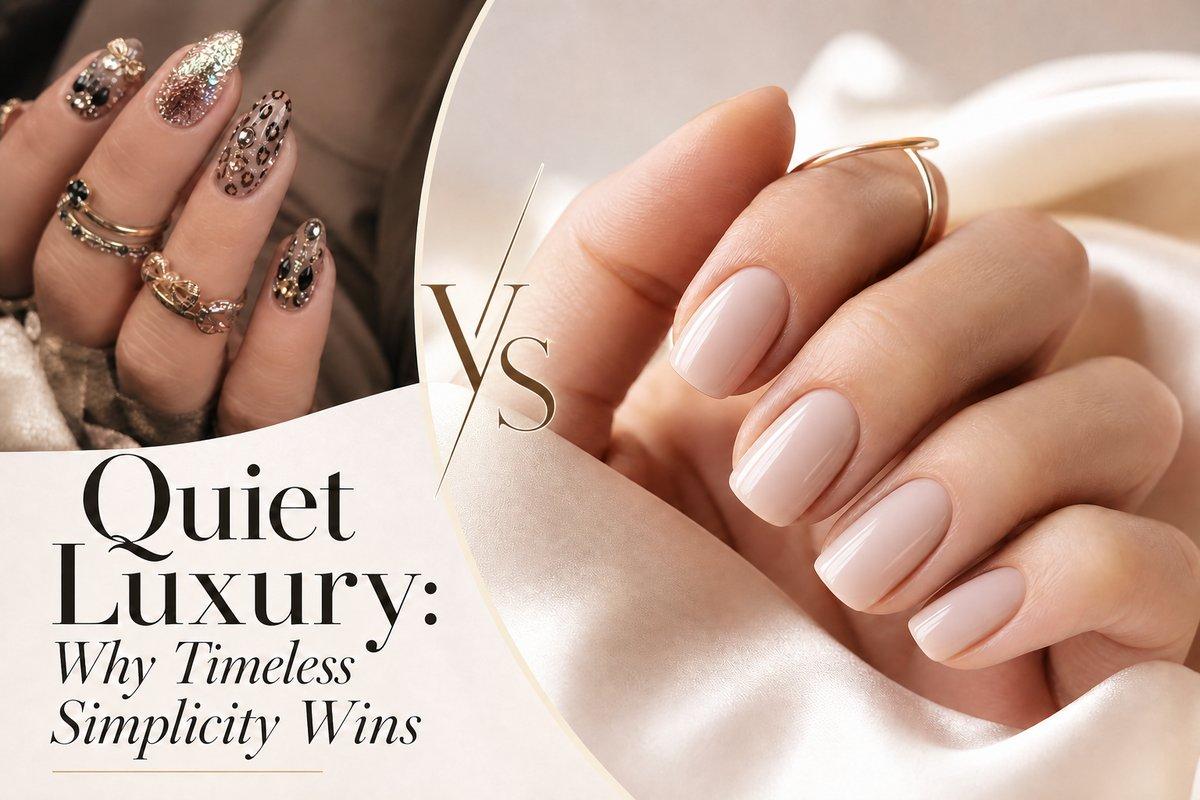
Premium press-on nails, simply put, is nail art that appears understated yet exudes high quality in detail, texture, and craftsmanship. Originating from the popular fashion trend of Quiet Luxury, it doesn’t rely on exaggerated logos, rhinestones, or complex designs to convey value. Instead, it conveys a premium press-on nails visual effect through color, materials, proportions, and details.
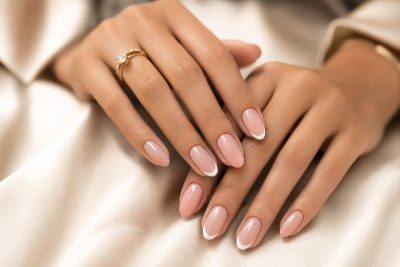
Common premium press-on nails uses low-saturation colors such as Milky White, Nude Pink, Latte Beige, Taupe, Dusty Rose, and Mocha, along with minimalist designs. Common elements include subtle French manicures, tonal gradients, semi-transparent jelly press on nails, matte textures, and subtle pearlescent effects. It avoids large areas of rhinestones, complex hand-painted details, and exaggerated 3D decorations. The core characteristic of premium press-on nails is: to make others think your hands are beautiful, not that your nails are exaggerated. Clean from afar, sophisticated up close.
Why do people prefer simple things?
And the simpler, the more sophisticated. This applies not only to premium press-on nails but also to other products.
1.The Human Brain Naturally Prefers “Low Cognitive Load”
Cognitive psychology has a concept called Processing Fluency, which means that the easier the brain is to process information, the more likely it is to produce feelings of “comfort,” “credibility,” and “high-end quality.” For example, a solid-color cashmere scarf, a leather bag without a logo, or a simple off-white French manicure. The brain requires almost no effort to interpret these.
However, if five colors and three materials appear simultaneously, the brain needs to process more information. The greater the amount of information, the higher the cognitive load. High cognitive load isn’t necessarily bad, but it can easily lead to feelings of clutter, cheapness, and fatigue. This is why many people find simple things more comfortable to look at.
2.The essence of sophistication lies in “restraint.”
There’s a long-standing rule in the luxury goods industry: truly expensive products often don’t need to desperately prove their value. For example, Hermès, LV, and GUCCI. Many classic products don’t even have large logos; the colors are very simple, and the designs are very restrained because they place their value in the materials, craftsmanship, and details. The same applies to press on nails. If a set of press on nails relies on oversized rhinestones, excessive glitter, and complex patterns to attract attention, consumers will subconsciously perceive the design as weak or a disposable item, rather than a fashionable accessory or a product suitable for everyday wear.
3.Simple designs more easily highlight quality
For example, suppose there are two sets of press on nails: A is off-white with a slight French manicure and no embellishments; B is full of rhinestones, glitter, and stickers.
At first glance, consumers might be more impressed with B, but over time, their attention will be drawn to the embellishments. With A, however, their attention will focus on the details of the press on nails shine, curves, thickness, and edge finishing. At this point, the craftsmanship will be magnified. Therefore, it’s often said in the industry: minimalist design is the ultimate test for the supply chain! Because nothing can hide flaws.

4.The more complex the design, the easier it is to go out of style.
Cat-eye press-on nails, glittery nails, bow nails, Y2K style—these designs all have their lifecycles. Trendy elements have short lifespans; they might be less popular after six months, and then become fashionable again a few years later. But off-white, nude pink, and French manicures have been popular for decades, enduring and without a cycle. This is because they resonate with natural beauty. Similar to the white T-shirt and jeans we wear every day, they don’t become obsolete due to changing trends.
5.High-income consumers often prefer understated luxury.
There’s a consumer psychology phenomenon here. When a consumer first starts pursuing fashion, they want to be noticed. So they choose brighter, shinier, and more complex designs. But as their purchasing power and social class increase, their focus shifts from how others perceive them to how comfortable they feel. Consumers pay more attention to whether their nails are comfortable to wear, durable, and coordinate with their overall outfit.
Thus, their aesthetic shifts from “how I look” to “looking naturally good.” This is why styles like Quiet Luxury, Old Money, and Clean Girl have become popular in recent years.
6.From a biological perspective, humans are drawn to “beauty in order.”
Humans generally appreciate the following characteristics: symmetry, balance, regularity, and consistency. These characteristics often signify health, stability, and predictability in nature.
Therefore, a creamy white French press-on nails, with its even gradient and regular lines, evokes a sense of comfort. Conversely, excessive layering of elements can create visual clutter and a lack of hierarchy, leading to eye fatigue.
Many factories believe that high-end equals more processes. However, the European and American markets increasingly value premium press-on nails that create the best texture with minimal design. Therefore, a truly premium press-on nails collection’s selling point is often not 100 rhinestones or 10 different techniques, but rather the perfection and consistency of the nail shape, the purity of the color, the natural sheen, and the precise fit.
Which brands make this kind of Quiet Luxury premium press-on nails?
If we’re talking about “Quiet Luxury” press-on nails, the following brands in the European and American markets are currently closest to this direction:
Olive & June
Its main colors are milky white, nude pink, and mauve, with short nails being the most common. It features a minimalist French design, suitable for everyday wear, emphasizing a natural, clean, and sophisticated look. Many of its best-selling designs are actually Milky Nails, Soap Nails, and Clean Girl Nails.
Static Nails
This brand has a strong minimalist and sophisticated feel, leaning towards a New York urban woman’s style. It emphasizes nail shape and shine, rarely using exaggerated embellishments. Consumer reviews often mention “Looks like a professional salon manicure.”
Glamnetic
Glamnetic is best known for its holiday and collaboration collections. However, in the past two years, it has also launched many Nude Collections, French Collections, and Natural Collections, starting to extend towards a more everyday and high-end direction.
Chillhouse
This brand is based in New York and features milky coffee and Morandi colors, with minimalist patterns that are artistic but not ostentatious. It perfectly aligns with the aesthetic preferences of consumers who value Old Money and Scandinavian Minimalism.
KISS
KISS is a large brand with both diamond-studded and party-themed models, as well as Bare But Better, Salon Nude, and Minimal French, all of which belong to the typical Quiet Luxury product line.
Many European and American brands are no longer pursuing “more complexity” when developing new products. Instead, they are researching how to make a creamy white French manicure look like it costs $20, $30, or even $40. This is actually the core logic of Quiet Luxury in the wearable nail industry. This kind of quiet luxury premium press-on nails has several advantages, especially for chain retailers and brands. It has a longer lifespan, is less prone to going out of style, and has a higher reorder rate; simply put, there’s no worry about it not selling.
For many brands, a premium press-on nails line (including Quiet Luxury) is not just a product line, but a way to shape brand image. For example, if a brand only offers full-diamond designs, holiday designs, Y2K styles, and extra-long nails, consumers might perceive it as a trendy, youthful, and entertainment-oriented brand.
However, if a brand also has a mature Quiet Luxury line, consumers will think that the brand understands aesthetics and quality. In other words, a premium press-on nails line often carries brand value, not just sales targets. Similar to the automotive industry, SUVs are the volume sellers, but a few flagship models are what build the brand image.
Many brands use minimalist collections to prove that we can not only design, but also produce quality products.
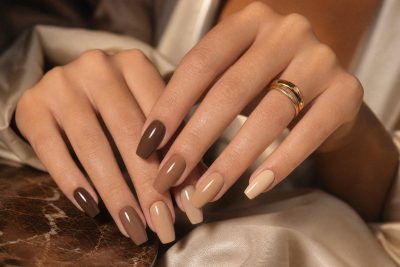
Why do many premium press-on nails brands also sell rhinestone designs?
Because brand and sales volume are two different things. The reality is that “Quiet Luxury” ≠ highest sales volume. Many consumers like the understated luxury style, but it’s not necessarily the style they buy most frequently. For example, they might wear a creamy white French manicure for everyday work, need accessories like pearl nail polish for weddings, and prefer red nail polish with rhinestones or mirrored metallic finishes for holidays like Christmas.
Consumers need different styles of products for different occasions. Therefore, premium press-on nails brands typically cultivate both a core customer base and high-traffic products:
Basic Base (Long-Term Stability): The representative type is Quiet Luxury.
Examples include Nude Collection, French Collection, and Milky Collection. These are characterized by year-round sales, low return rates, and long product lifecycles.
Trending Base (Creating Buzz):
Examples include Chrome Nails, Cat Eye Nails, Y2K Nails, and Holiday Nails. These press on nails designs easily spread widely on social media, enabling viral marketing and bringing new customers to the brand.
Therefore, we see Olive & June offering a large selection of nude and French-style press on nails, along with seasonal limited editions. Glaminic offers both minimalist lines and a large selection of rhinestone and holiday-themed collections. KISS covers a wide range of styles, from ultra-affordable to relatively high-end.
Many brands use Quiet Luxury as a stepping stone into high-end channels. Whether it’s department store buyers, boutique beauty chains, or high-end independent websites, buyers typically prefer to purchase off-white, nude pink, and French-style designs rather than designs heavily reliant on trends. The reason is simple: these styles are safer and appeal to a wider age range. From 16-year-olds to 60-year-olds, inventory risk is lower. Buyers aren’t looking for fleeting trends, but rather consistent stability.
Therefore, while many premium press-on nails brands attract traffic with sparkly designs, the truly stable and consistently profitable lines that generate long-term reorders are often the seemingly simplest Quiet Luxury collections. This also explains why many established brands exhibit a product structure where the most eye-catching designs are featured on the homepage and in advertisements, while the most profitable designs are often the seemingly ordinary nude, off-white, and French manicures.
If you were a fashion trend press on nails brand, what would you choose?
If you’re a brand manager, try not to focus solely on eye-catching designs. This isn’t because eye-catching designs don’t sell well, but because they’re difficult to build a long-term, stable brand image from.
Problem 1: High initial traffic, but weak repeat purchases.
A consumer sees the press-on nails for the first time and thinks, “It’s so beautiful!” and places an order. But here’s the problem: how many times a month will they wear it? Maybe only a few times a year. A nude pink French press-on nails, on the other hand, will be worn many times a year. Therefore, eye-catching designs easily generate initial purchases. Basic designs are more likely to lead to long-term repeat purchases.
Problem 2: You’ll be forced to constantly chase trends.
If a brand only sells eye-catching items, this year Blooming Gel Press-On Nails are trending, you follow suit. Next year Jelly Press-On Nails are trending, you follow suit. The year after, Mermaid Nails are trending, and you still have to follow suit. As a result, brands become increasingly reliant on various forms of traffic, constantly monitoring different trends. If the traffic stops, sales easily decline. Many influencer brands fail here. Because consumers like trends, not brands.
Problem 3: Increased Supply Chain Pressure
This is particularly relevant from the perspective of Senboma press on nail factory. Complex designs typically mean more processes, more components, more labor, and a higher defect rate. For example, a machine can produce many pairs of milky white French manicures in 10 minutes, while a complex rhinestone design might require rhinestones, metal parts, hand-applied attachments, and multiple layers of processing. Both production costs and quality control become more difficult.
Problem 4: Brands Struggle to “Upgrade”
Many brands that only focus on exaggerated styles encounter a problem: consumers think, “This brand is fun,” but they don’t perceive it as “high-end.” Yet, a sense of sophistication directly determines the average order value and brand premium. This is why many brands, at a certain stage of development, launch premium press-on nails products with a refined, understated style—they want the market to begin recognizing brand value, not just design creativity.
If I were launching a new premium press-on nails brand in 2026, my strategy would be as follows:
◎ 20% Quiet Luxury (Brand Building)
◎ 50% Everyday French/Nude Colors (Money Making)
◎ 30% Eye-Catching Designs (Traffic Generation)
Because today’s market isn’t as lacking in creative and attention-grabbing elements as it was in 2020. What’s scarcer now is a reason for consumers to return for a second or third purchase. And this reason is often not an extravagantly designed press-on nails, but rather the “ordinary” press-on nails she wears every day of the month.
If you have any questions about press-on nails or are looking for a reliable manufacturing partner, please feel free to contact us at any time.